Of all the numbers in a numerology chart, the Birthday Number is the one I would point a parent toward first.
Here is why. Adults have years of conditioning layered on top of their natural wiring. We have learned what is acceptable to show, what to suppress, how to adapt to different environments and expectations. Reading someone’s natural baseline through all of that takes a bit of work.
Children have not built those layers yet. What you see is what is actually there.
The four year old who refuses to let anyone help them put their shoes on, even when they are clearly struggling and running late, and gets genuinely upset if you step in without being asked. That is Birthday Number 1 energy. The drive for independence and autonomy is not a phase. It is their wiring, and it showed up before they had words for it.
The child who cannot fall asleep after overhearing their parents argue, even about something small and quickly resolved, and needs to check several times that everyone is okay before they can settle. That is Birthday Number 2. They feel the emotional temperature of a room the way some people feel a change in weather, physically, before anyone has said a word.
The seven year old who asks you at dinner why people die, or why some families have less money than others, or whether animals know they are alive, and then goes quiet for the rest of the meal because they are genuinely thinking it through. That is Birthday Number 7. They are not being odd. They are doing exactly what their mind was built to do.
The child who has been asked to sit still for twenty minutes and has rearranged their chair, visited the bathroom twice, started three different conversations, and is now upside down on the couch. That is Birthday Number 5. Trying to make that child sit still is like trying to hold water in your hands. The energy needs somewhere to go, not somewhere to stop.
None of these are difficult children. They are children whose natural wiring is fully visible because life has not yet taught them to dial it down.
And this is exactly where understanding the Birthday Number becomes one of the most practical tools a parent can have.
Because the goal is never to flatten a child’s natural energy. It is to help them develop it into something that actually works for them in life, while also giving them the self-awareness to handle the shadow side of that same energy before it becomes a pattern that costs them.
Take the Birthday Number 1 child. That drive and independence, when it is developed well, becomes genuine leadership. The kind of person who starts things, moves things forward, and is not afraid to go first when everyone else is hesitating. That is a remarkable quality and it is worth nurturing deliberately. Give them real responsibilities they can own completely. Let them lead projects, make genuine decisions, experience what it feels like to take something from start to finish on their own terms. Feed that energy with knowledge, with tools, with exposure to people who have built and pioneered things. They will absorb it hungrily because it points in the direction they are already wired to go.
But the other side of that same energy is something parents need to address early and honestly. The Birthday 1 child who never learns to manage their aggression when challenged becomes the adult who burns bridges the moment someone questions their approach. The one who was never taught to genuinely receive advice becomes the leader who surrounds themselves with people who only agree with them and cannot understand why things keep going wrong. The stubbornness that makes them unstoppable when it is pointed in the right direction becomes the thing that isolates them when it is not.
So as a parent, the work is twofold. You build the strength and you address the shadow at the same time. Not by punishing the intensity, but by teaching them early that the strongest leaders are the ones who know when to listen. That taking advice from the right person is not weakness, it is strategy. That controlling their reaction when they feel challenged is not backing down, it is choosing when and how to use their power. Framed that way, a Birthday 1 child will actually engage with it, because it speaks to something they already care about, being effective and being respected.
The same principle applies across every Birthday Number.
The Birthday 2 child who is deeply sensitive and attuned to everyone around them has the natural foundation for extraordinary emotional intelligence, the kind that makes someone genuinely good at building trust, resolving conflict, and making people feel understood. Those are not soft skills. In almost every field that involves other human beings, which is most of them, that quality is genuinely rare and genuinely valuable. But if that same child is never helped to understand their own emotional boundaries, they grow up absorbing everyone else’s feelings as their own and having no idea why they are exhausted all the time, or why they keep ending up in relationships where they give far more than they receive. Teaching a Birthday 2 child early that their sensitivity is a gift and not a liability, while also teaching them that they are allowed to protect their own energy, changes the entire trajectory.
The Birthday 7 child who questions everything and disappears into their own thinking has the foundation for genuine depth of understanding, the kind that leads to real expertise, original insight, and the ability to see what others consistently miss. But if that same child is never helped to connect their inner world to the people around them, they can grow into someone brilliant and profoundly isolated, someone who has a lot to offer but no idea how to let anyone in close enough to receive it.
The Birthday 5 child who is restless and craves variety and stimulation has the foundation for adaptability, creativity, and the ability to thrive in environments that would overwhelm someone with more rigid wiring. But without guidance, that same energy becomes the adult who cannot finish anything, who chases novelty at the cost of depth, and who mistakes constant movement for actual progress.
Every strength has a shadow. And the earlier a child understands both sides of their own nature, the more equipped they are to make real choices about how they show up rather than just reacting from wiring they do not even know they have.
This is why I think the numerology map is genuinely one of the most useful things a parent can have access to, not as a label to put on a child, but as a way of seeing them clearly and early. The patterns that show up in a full chart give you a real picture of what your child is naturally built for, where their energy wants to go, and where they are likely to struggle if nobody helps them navigate it. That is not a small thing. Most people spend the better part of their adult lives figuring out what a good numerology map could have shown them decades earlier.
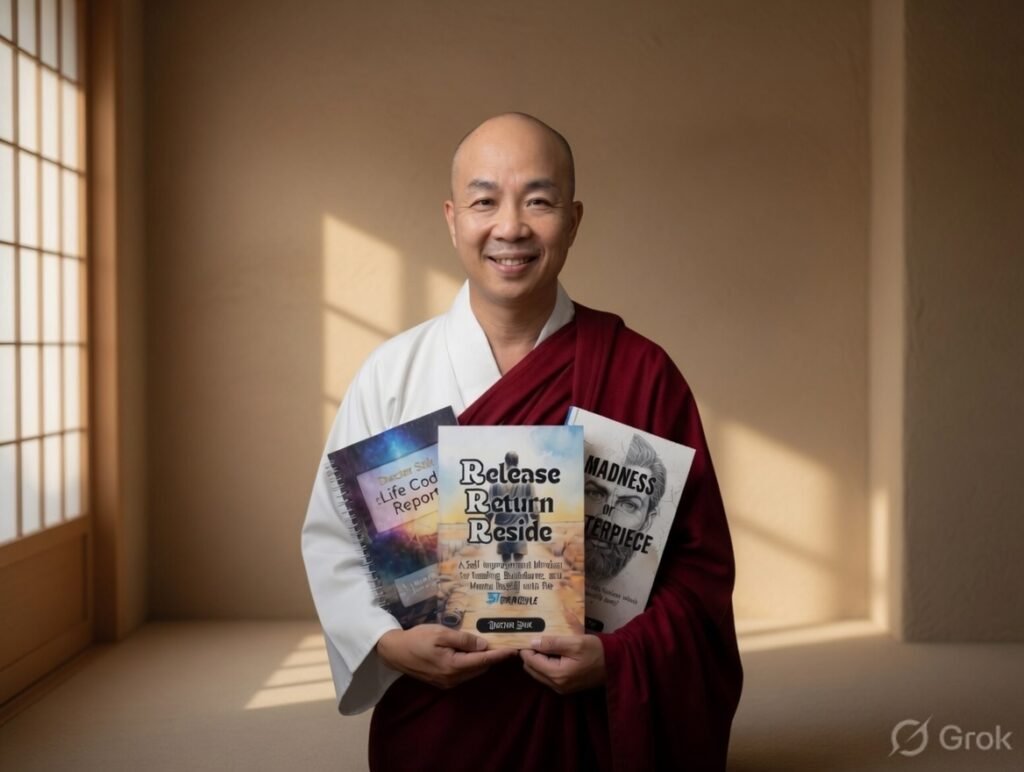
If you would like a personalised numerology map for your child, my Doctor Stik 120-page Numerology Map explores their full chart in depth. You can find the details below.